Starting a private therapy practice in Pakistan in 2026 is more realistic than it has ever been. The regulatory landscape is clearer, telehealth is accepted, and most of the stack you need is cloud software you can configure in an afternoon. This guide walks through the eight concrete steps — in the order a working Pakistani therapist should take them.
Step 1 — Confirm your qualifications and licensure
Pakistan does not yet have a single statutory licensing body for psychologists, but reputable practice depends on three things: (1) a recognised degree — MS Clinical Psychology, MPhil, PsyD, PhD, or an ABA-specific BCBA/RBT credential, (2) supervised clinical hours, and (3) membership of a professional body such as the Pakistan Psychological Association (PPA) or the Pakistan Association of Clinical Psychologists.
Step 2 — Register your business with FBR
Even a solo practice should be a registered sole proprietor with an NTN. This lets you issue proper receipts, collect payments to a business bank account, and claim business expenses. If you plan to hire even one assistant, register for EOBI from day one — see our payroll guide.
Step 3 — Decide on your service model
- In-clinic only (a rented office or a spare room at home set up as a consulting room)
- Online only (telehealth via Jitsi, Google Meet or an EHR with built-in video)
- Hybrid (most sustainable in Pakistan — 2–3 online days, 2–3 clinic days)
- Mobile (home visits for autism / ABA / elderly clients — premium pricing)
Step 4 — Price your sessions
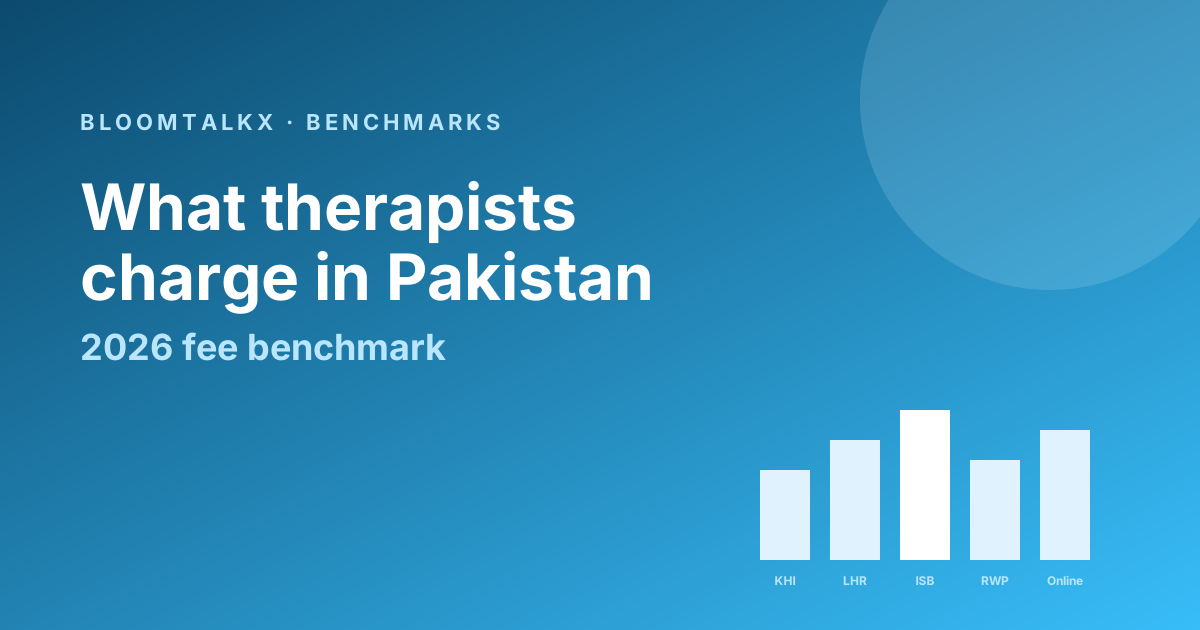
In 2026, a 50-minute session in Pakistan ranges from PKR 2,500 (new graduate, online) to PKR 15,000 (senior psychiatrist, Karachi/Lahore clinic). Most mid-career psychologists charge PKR 4,000–8,000. See our Pakistan fee benchmark for current ranges by city and specialty.
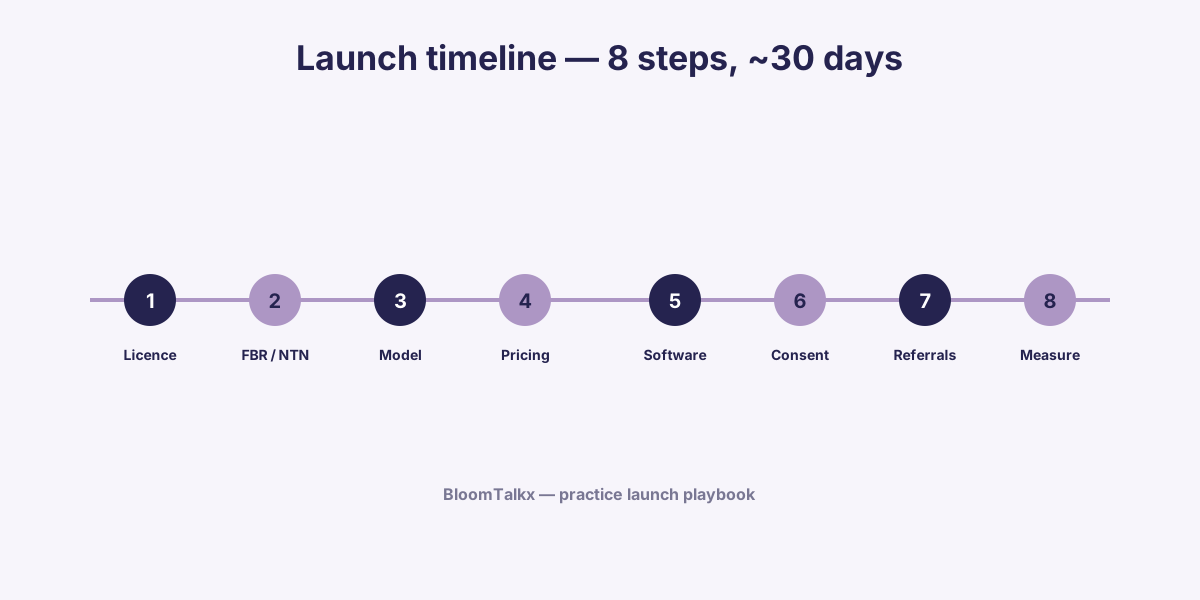
Step 5 — Set up your software stack
- A public profile with online booking (BloomTalkx therapist directory is free to join)
- Encrypted patient records with SOAP notes and treatment plans
- Telehealth video that works on 3G and does not drop under load
- A simple invoicing + receipts flow
- A secure place for intake forms and consent
Step 6 — Write your consent, intake and privacy documents
At minimum you need: an informed consent form, a privacy notice that references PDPB (and HIPAA if any clients are overseas), a payment and cancellation policy, and a release-of-information form. Many therapists in Pakistan skip this step — doing it on day one protects you professionally and makes supervision easier.
Step 7 — Build your referral network
Your first 20 clients will mostly come from three sources: GPs and family physicians, school counsellors, and the three or four senior clinicians who taught you. Build a simple one-page PDF profile and a WhatsApp introduction, and send it to five referrers in your first month.
Step 8 — Measure what matters
- Weekly utilisation (booked hours ÷ offered hours)
- No-show rate
- Average revenue per session (not just list price — net of discounts)
- Clinical outcomes (PHQ-9, GAD-7, discipline-specific measures over time)
Frequently asked questions
- Do I need a medical licence to practise therapy in Pakistan?
- No, you need a medical licence to prescribe medication (that is a psychiatrist). Psychologists and counsellors do not prescribe and are regulated through their professional body.
- Can I start online-only?
- Yes. Many successful Pakistani psychologists in 2026 run online-first practices and add a weekly clinic day only once demand justifies the rent.
- What is the cheapest way to launch?
- A free BloomTalkx profile, a rented clinic room by the hour at an existing centre, and 2 online days a week on your laptop. Realistic monthly fixed cost: under PKR 25,000.
List your practice on BloomTalkx
Free therapist profile with online booking, encrypted notes and PKR invoicing. Live in under 10 minutes.
Create a free profile