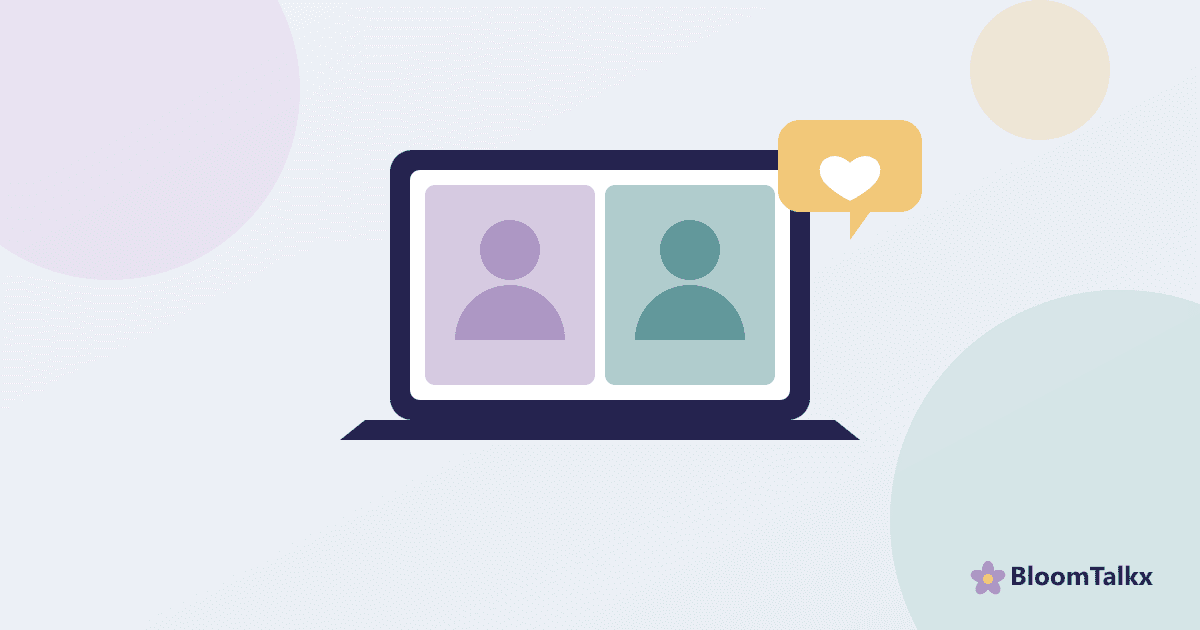
Online therapy is the same kind of conversation you'd have in a clinic, held over a secure video call. For many people in Pakistan it removes the biggest obstacles: long travel in traffic, taking time off work, and the worry of being seen walking into a clinic. It also opens up therapists in other cities, or people living abroad who want someone who understands home.
What you need
- A phone, tablet or laptop with a working camera and microphone.
- A reasonably stable internet connection. Mobile data is usually enough for a video call.
- A private, quiet place where you can talk for 45 to 60 minutes.
- Headphones, which improve sound quality and help keep the conversation private.
What a session looks like
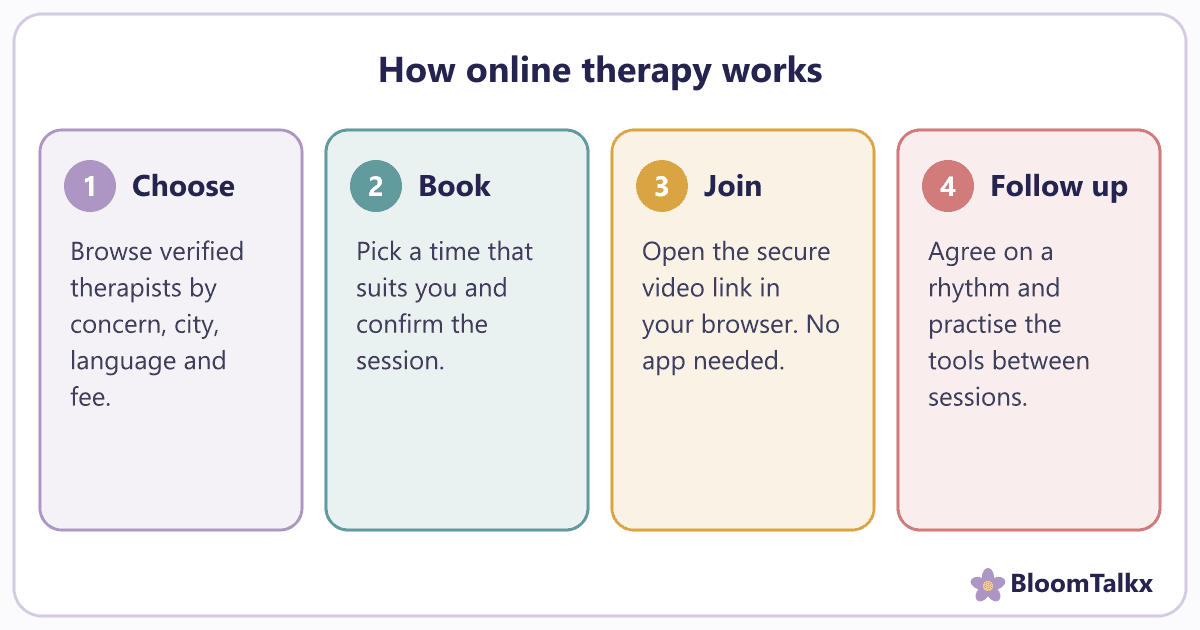
You join through a secure link at your booked time, usually in your browser. The first session is mostly an introduction: your therapist asks what brought you in, explains how they work and how confidentiality applies, and you agree together on how often to meet. Later sessions follow the same rhythm as in-person therapy, with conversation, tools to try and sometimes small tasks to practise between sessions.
Keeping it private at home
- Tell the household you need an uninterrupted hour. You don't have to explain what it's for.
- Use headphones so no one can hear the therapist's side of the conversation.
- If space is tight, try a closed room, a quiet terrace or even a parked car.
- Play soft background noise outside the door, and close other apps and tabs so notifications don't interrupt.
Who online therapy suits well
- Adults dealing with anxiety, low mood, stress, relationships, grief or life transitions.
- People with busy schedules, limited mobility or no suitable therapist nearby.
- Overseas Pakistanis who want a therapist who shares their language and cultural context.
When in-person may be better
- You are in crisis or at risk of harming yourself. Contact emergency services or a local clinic first.
- Young children, whose therapy often relies on play and hands-on activities such as speech, occupational or behaviour therapy.
- You can't find any private space or reliable connection. A clinic visit may work better for now.
How to choose a therapist online
- Check their credentials and what they focus on, and whether that matches your concern.
- Look for the languages they work in. Urdu, English and regional languages all matter.
- Make sure fees, session length and cancellation terms are clear before you pay.
- Pick session times that suit your time zone, especially if you live abroad.