
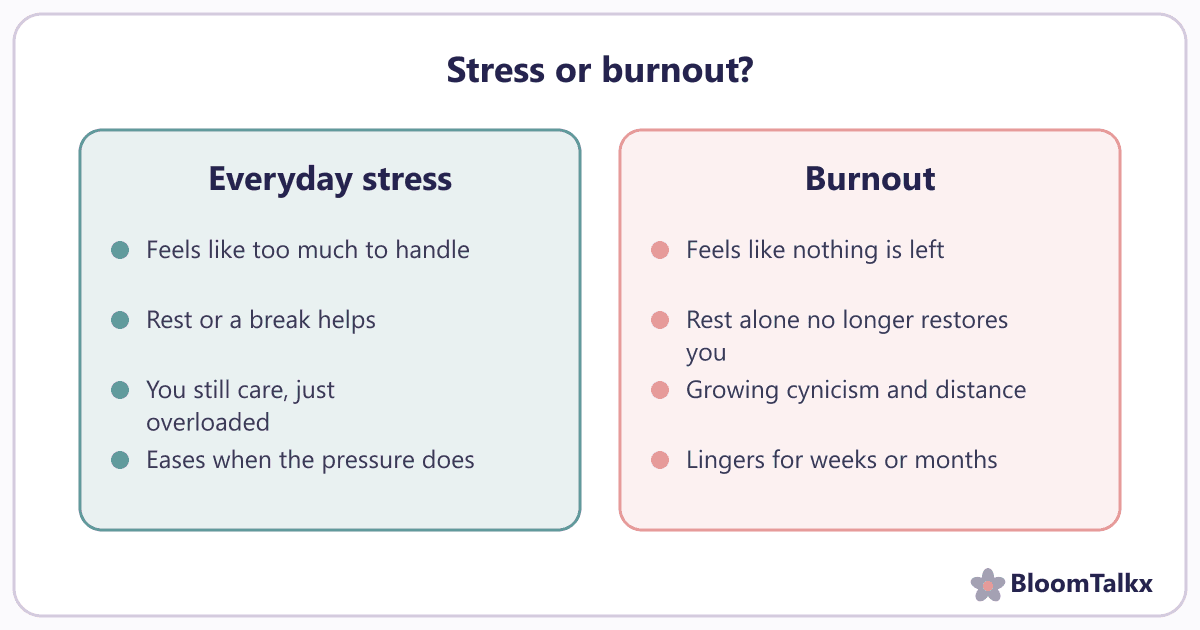
Everyone has stressful weeks. Burnout is different. The World Health Organization describes it as the result of chronic workplace stress that hasn't been successfully managed, marked by exhaustion, growing mental distance or cynicism about your job, and a drop in how effective you feel. It isn't a personal weakness, and it often hits the people who care most and try hardest.
Signs to watch for
- Deep tiredness that a weekend or even a holiday doesn't fix.
- Dreading work, or feeling numb or cynical about tasks you once cared about.
- Struggling to concentrate, forgetting things, or finding simple decisions hard.
- Irritability with colleagues, family or friends.
- Headaches, stomach trouble, disrupted sleep or frequent illness.
- Feeling that nothing you do makes a difference.
Why it happens
- A workload that never fits in the hours available.
- Little control over how, when or what you work on.
- Long hours and no boundary between work and home, including constant WhatsApp messages.
- Unclear expectations, or feeling unrecognised and undervalued.
- Money worries that make it hard to say no or to leave.
Steps that help
- Name it. Saying 'this is burnout, not laziness' is the first step.
- Protect sleep, regular meals and some movement, even a 15-minute walk.
- Set small boundaries: a time you stop answering messages, and breaks you actually take.
- Talk to your manager about workload or priorities, if it is safe to do so.
- Lean on people you trust, and tell someone how you are really doing.
- Pick one thing outside work that restores you and keep it in your week.
When to talk to a professional
If exhaustion, low mood or anxiety has lasted several weeks, if sleep and appetite are affected, or if you feel hopeless, it's time to talk to someone. Burnout can overlap with depression and anxiety, and a therapist can help you work out which it is. Therapy also helps with the patterns that keep people stuck, such as perfectionism, difficulty saying no and guilt about resting.